Getting zero traffic and hearing crickets is the standard initiation for every new ecommerce entrepreneur. You spent weeks perfecting your Shopify store, but launching isn’t the finish line, it’s the starting line.
The goal of your first 100 sales isn’t necessarily to become highly profitable right away. It is to validate your product, test your site’s user experience, and figure out which traffic channel actually resonates with your target audience.
Here is a practical, channel-by-channel breakdown of how to drive those critical first conversions without burning through your entire marketing budget.
Summary
- The first 100 sales are about validation, testing your funnel, and finding your most profitable traffic channel.
- Best for immediate traction: Personal network outreach, micro-influencer product seeding, and highly targeted Google Shopping Ads.
- Best for long-term growth: Short-form organic video (TikTok/Reels) and foundational SEO.
- Biggest mistake to avoid: Pouring large budgets into broad Meta (Facebook/Instagram) ads before your store has proven its conversion rate.
- Prerequisite: Ensure your store has trust signals (policies, clear shipping, contact info) before driving any traffic.
To get your first 100 Shopify sales, focus on high-intent channels like Google Shopping, leverage micro-influencer product seeding for social proof, and tap into your personal network. Avoid high-budget broad ads until your store converts consistently.
Why the First 100 Shopify Sales Are Your Most Important Milestone
In ecommerce, your first 100 sales provide the baseline data required to scale.
What This Means for Shopify Merchants:
Before you hit 100 sales, you are operating on assumptions. You assume your pricing is right, you assume your checkout process is frictionless, and you assume your product descriptions answer customer questions. Hitting 100 sales gives you actual Google Analytics 4 (GA4) data and Shopify analytics to prove what works. It transitions your business from a concept to a validated store.
High-Intent Traffic Channels for Immediate Shopify Sales
If you need sales quickly, you must target “bottom-of-the-funnel” traffic. These are people who already know they want a product like yours and are actively looking to buy.
Leveraging Google Shopping Ads for High-Intent Buyers
Unlike social media ads that interrupt people scrolling through photos, Google Shopping puts your products in front of users actively typing your product name into search.
For new Shopify stores, setting up a Google Merchant Center account and running a small Performance Max or standard Shopping campaign is one of the safest ways to spend your first ad dollars. You pay for clicks from people who have already seen your product image and price.
Pro Tip: Optimize Your Success with AdTrack
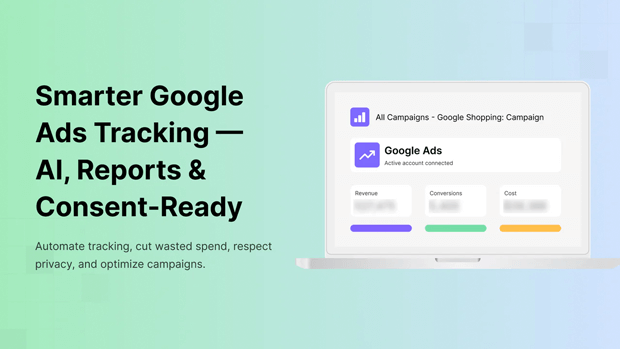
Successful Shopify store owners use AdTrack – Google Ads Tracking for a seamless setup of Google Ads conversions. By utilizing server-side tracking, merchants ensure higher data accuracy and reliability, as it is not affected by browser restrictions or ad blockers.
AdTrack simplifies your advertising workflow by integrating advanced tools to manage and analyze your data efficiently:
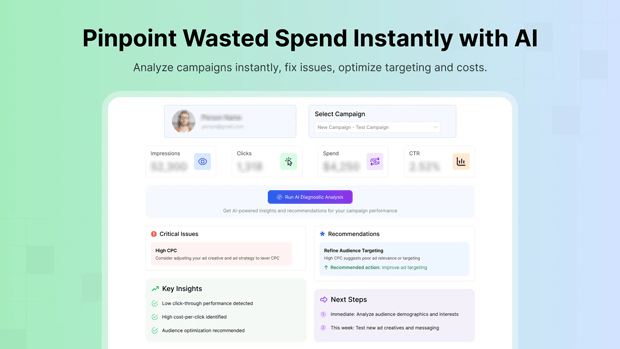
- AI Ad Diagnostic Tool: Automatically analyze campaign performance to identify critical issues and receive actionable recommendations for improvement.
- AI Ad Copy Generator: Quickly create compelling headlines and descriptions optimized for Google Ads to drive higher engagement.
- AI Ad Consultant: Access a real-time interactive chat for expert strategy advice, performance optimization suggestions, and guidance on complex Google Ads topics.
- Comprehensive Tracking: Easily enable tracking for the entire customer journey, from page views and searches to “Add to Cart” and final purchases.
Tapping into Your Personal Network and Direct Outreach
Do not underestimate the power of unscalable, direct sales. Reach out to friends, family, and colleagues. However, don’t just ask them for a favor—ask them to share your store with their networks if it fits.
Additionally, engage in relevant Reddit communities, Facebook Groups, or specialized forums.
- The rule for community marketing: Provide 90% value and education, and only pitch your product 10% of the time. If you sell specialized coffee gear, answer questions in coffee subreddits for a week before dropping a link to your store.
Social Commerce and Organic Traffic Strategies for New Stores
Once you have tapped out your immediate network and set up search-based ads, it’s time to build organic momentum.
Partnering with Micro-Influencers for Authentic Product Seeding
Large influencers cost thousands of dollars. Micro-influencers (creators with 2,000 to 10,000 highly engaged followers) are often willing to feature your product in exchange for receiving it for free.
This strategy, known as Product Seeding, accomplishes two things:
- It puts your product in front of a targeted niche audience.
- It generates user-generated content (UGC) that you can repurpose on your own Shopify product pages to build trust.
Utilizing TikTok and Instagram Reels for Viral Organic Reach
Short-form video is currently the only organic channel where a brand-new account with zero followers can reach millions of views overnight.
Focus on creating “hook-driven” content:
- Show the problem your product solves in the first 3 seconds.
- Pack orders on camera and tell the story of why you started the business.
- Show the “behind the scenes” manufacturing process.
Traffic Channel Comparison: Cost vs. Time to ROI
| Traffic Channel | Initial Cost | Time to First Sale | Best For |
| Personal Network | Free | 1–3 Days | Immediate validation |
| Google Shopping | Low to Medium | 3–7 Days | Capturing existing demand |
| Micro-Influencers | Cost of Goods | 1–3 Weeks | Social proof and niche reach |
| TikTok/Reels | Free | 1–4 Weeks | Brand awareness and viral growth |
| SEO / Blogging | Free | 3–6 Months | Long-term sustainable traffic |
Common Mistakes That Kill Conversions for New Shopify Stores
Driving traffic is useless if your store acts like a leaky bucket. According to standard ecommerce benchmarks, a good conversion rate is between 1.5% and 2%. If you are sending hundreds of people to your site and getting zero sales, check for these issues:
- Hidden Shipping Costs: The number one reason for cart abandonment is unexpected shipping fees at checkout. Be transparent about shipping on your product page.
- Lack of Trust Signals: A new store needs basic trust elements. This includes a clear returns policy, a “Contact Us” page with a physical address or email, and secure payment badges.
- Friction in the Mobile Experience: Over 70% of Shopify traffic comes from mobile devices. If your “Add to Cart” button requires scrolling on a phone, or your images load slowly, you will lose the sale.
The Pre-Traffic Shopify Launch Checklist
Before spending a single dollar on ads or reaching out to influencers, ensure your store passes this baseline checklist:
- Test the checkout: Buy a product yourself using a real credit card (you can refund it in Shopify immediately).
- Set up Google Analytics 4 (GA4): Ensure basic tracking is firing so you know where traffic comes from.
- Publish core policies: Terms of Service, Privacy Policy, Shipping Policy, and Return Policy.
- Add trust apps: Use SalesPulse Sales Pop Up to show real-time notifications whenever a customer purchases an item. These notifications serve as immediate social proof, helping new visitors feel confident enough to complete their own purchase.
- Optimize for mobile: Review your site on your smartphone to ensure text is legible and buttons are clickable.
Frequently Asked Questions About Getting Initial Shopify Sales
How much traffic do I need to get my first sale?
If the average ecommerce conversion rate is 1-2%, you realistically need 50 to 100 highly targeted visitors to generate a single sale. If your traffic is broad or low-intent, you may need 300 to 500 visitors.
Should I run Facebook Ads for a brand new Shopify store?
It is generally recommended to wait. Broad Meta ads require historical pixel data to optimize effectively. Without past conversion data, you are paying the algorithm to “learn,” which can quickly drain a small budget.
Is it normal to get traffic but no sales on Shopify?
Yes. If you have 100+ visitors and no sales, you have a conversion rate problem, not a traffic problem. Analyze user behavior to see where they are dropping off (e.g., bouncing from the homepage vs. abandoning the cart).
Final Recap
Securing your first 100 sales on Shopify requires a blend of hustle, strategic testing, and patience.
Start by capturing high-intent search traffic with Google Shopping, leverage product seeding with micro-influencers to build vital social proof, and aggressively test short-form organic video.
Most importantly, treat every early visitor as a data point to refine your store’s user experience.