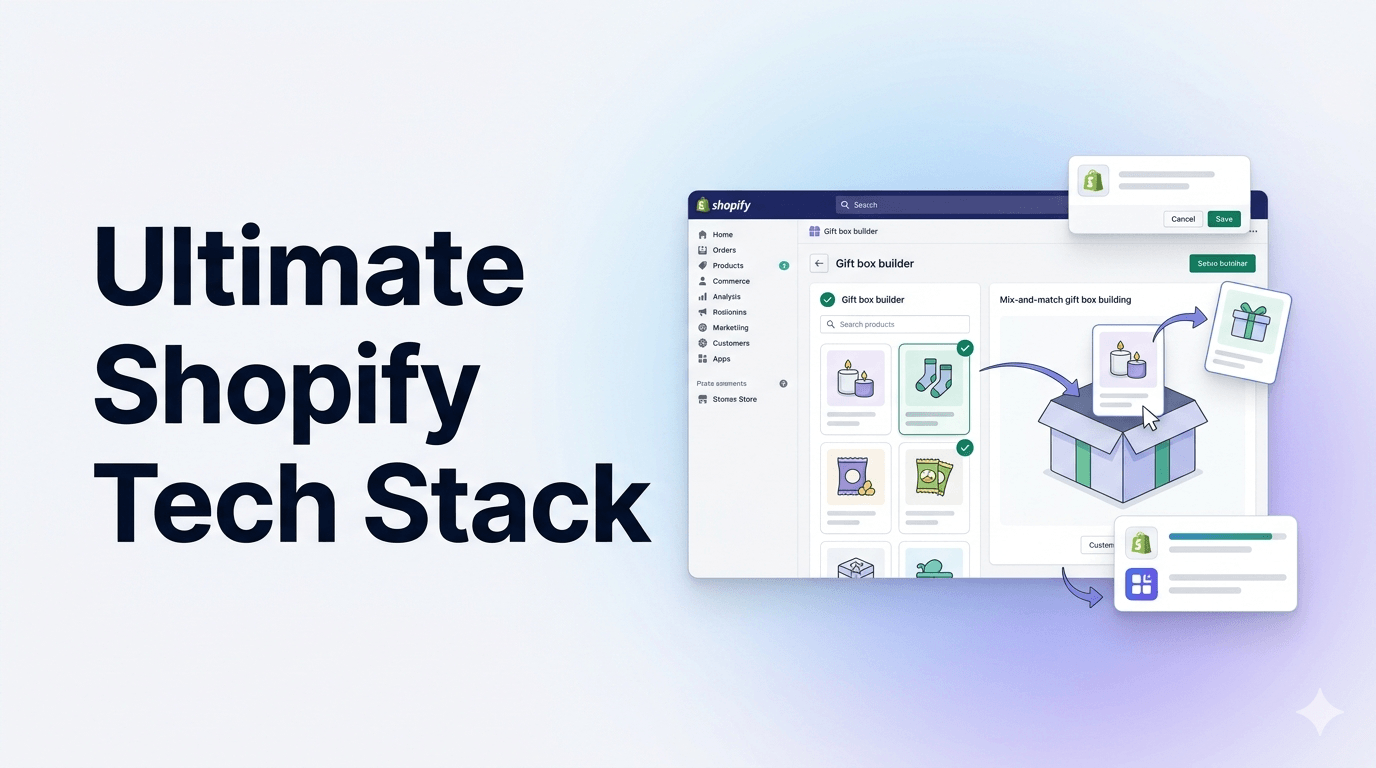
The Shopify tech stack is the collection of apps, tools, and integrations that make an eCommerce operation work. It covers everything from tracking, analytics, personalization, marketing automation and customer support to post-purchase tools.
The right stack makes sure all the parts of your online store are integrated. This converts visitors to buyers and buyers to loyal customers.
Why it matters:
Traffic alone is not enough for modern ecommerce success. So without a connected tech stack, your store could be leaving money on the table: losing sales opportunities, wasting ad spend, and missing revenue optimization opportunities.
Financial Impact:
A well-designed Shopify stack can have a direct financial impact on your store:
- Revenue growth: AI-driven chat and personalized recommendations guide shoppers to purchase.
- Higher AOV (Average Order Value): Upsells, bundles, and cross-selling increase the value of each order.
- Improved retention: Loyalty programs and automated follow-ups keep customers returning.
- ROI optimization: Accurate tracking and analytics reduce wasted ad spend and improve campaign performance.
In short, the right tech stack turns operational efficiency into measurable profits.
Key Benchmarks
When implemented correctly, a modern Shopify stack can deliver:
- Conversion uplift: 10–30% increase in chat-assisted or personalized conversions.
- AOV increase: 5–20% growth via upsells, bundles, and product recommendations.
- Retention rate improvement: 15–25% increase in repeat buyers through loyalty and automation.
- CAC reduction: 10–20% lower customer acquisition costs when tracking and ads are fully optimized.
These benchmarks give merchants targets to measure the effectiveness of their tech stack.
What This Article Covers
This guide will show you how to build a high-performing Shopify tech stack. You’ll learn:
- Layer-by-layer breakdown of the stack, from tracking to AI chat.
- Diagnostics and audit frameworks to troubleshoot underperforming areas.
- ROI calculations and benchmarks to measure success.
- How Zipchat AI fits strategically as a conversion and revenue-driving layer.
- 2026+ future trends in AI, automation, and behavioral shifts in ecommerce.
By the end, you’ll know exactly which apps to use, how they work together, and how to measure their impact.
Overview
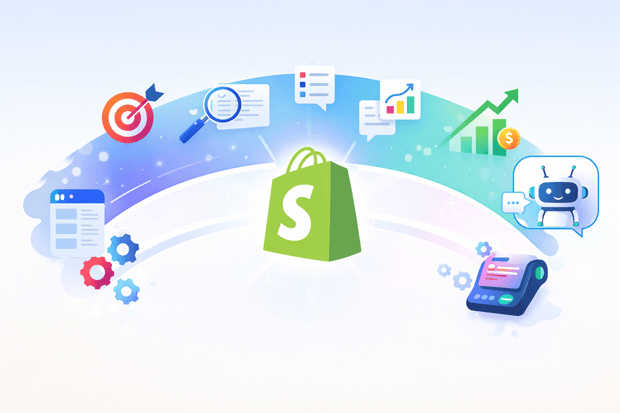
Modern Shopify growth requires more than just traffic. While attracting visitors is important, real growth comes from turning visitors into buyers and also ensuring they come back. This is where a connected Shopify tech stack becomes essential.
A high-performing stack combines tools that cover every layer of your store’s operations, including:
- Conversational commerce – guiding shoppers with AI chat.
- Tracking & attribution – capturing accurate data for ads and campaigns.
- Analytics & BI – making sense of customer behavior and profitability.
- Personalization & merchandising – recommending the right products at the right time.
- Retention & loyalty – encouraging repeat purchases.
- Lifecycle marketing – automating email and SMS flows.
- Post-purchase tools – capturing intent for delayed conversions.
By layering these tools, stores can improve operational efficiency, boost revenue, and deliver a seamless customer experience.
Layer 1: Conversational Commerce (Zipchat AI)
What it is
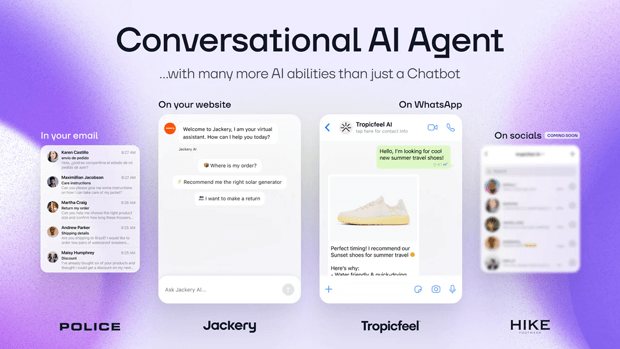
Zipchat AI is an ecommerce-focused AI chatbot that serves as both a sales assistant and a support engine. It engages shoppers proactively, answers questions, recommends products, and guides users through the buying journey.
Top Features
- AI product recommendations based on catalog and shopper behavior.
- Abandoned cart recovery with automated reminders.
- WhatsApp automation for instant messaging and follow-ups.
- Multilingual support covering 95+ languages.
- 24/7 customer support for FAQs, returns, and order tracking.
Business Value
- Captures high-intent shoppers who may otherwise abandon the Shopify app store.
- Improves revenue model resilience, helping stores maintain conversions even when traffic is inconsistent.
- Turns casual chats into measurable sales opportunities.
When This Fails
- Poor integration with the product catalog leads to inaccurate recommendations.
- Lack of proactive engagement results in missed sales opportunities.
- Low response optimization can frustrate users and reduce trust.
Diagnostic Framework
Signs that your AI chat isn’t converting:
- Low chat-to-order rate.
- High number of abandoned conversations.
- Minimal upsell or cross-sell impact.
- Low return interactions from WhatsApp follow-ups.
Layer 2: Tracking & Attribution (Pixee Multi Pixel & Meta Ads)
What it is
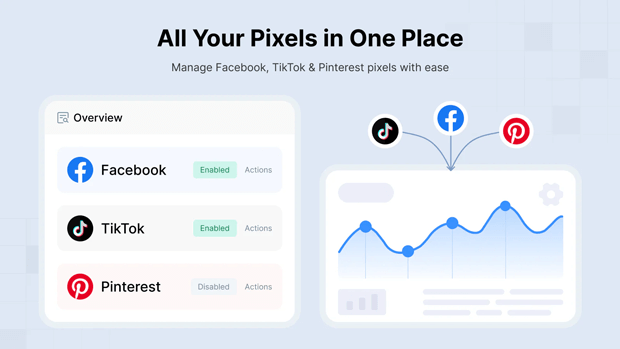
Pixee manages multi-platform pixel tracking and enables server-side tracking via Conversions API for Shopify stores. It ensures that every shopper interaction, from clicks to purchases, is accurately recorded and attributed.
Top Features
- CAPI server-side events for accurate tracking.
- Multi-platform pixel management (Meta, TikTok, Pinterest).
- Automatic product catalog syncing for dynamic ads.
- Custom event tracking and analytics dashboards.
Why It Matters
Accurate attribution ensures that marketing spend delivers true ROI. Without proper tracking, ad platforms misreport performance, and revenue-generating interactions like chat-assisted sales can be undervalued.
When This Fails
- Broken or missing pixels.
- Browser scripts are blocked by ad blockers or privacy settings.
- Incomplete conversion tracking that leads to misattributed revenue.
Diagnostic Framework
To check if conversions are tracked properly:
- Audit standard events (View Content, Add to Cart, Purchase).
- Compare platform-reported revenue with Shopify data.
- Verify server-side events are firing consistently.
- Test product catalog syncing with dynamic ads.
Layer 3: Analytics & Business Intelligence (Daasity)
What it is
Daasity is an analytics and BI platform for ecommerce business. It aggregates data across channels: Shopify, ads, email, and more into unified dashboards that provide actionable insights.
Top Features
- Unified dashboards and reporting.
- LTV (Lifetime Value) and CAC (Customer Acquisition Cost) analysis.
- Predictive forecasting and scenario modeling.
- Cross-channel performance tracking.
Financial Impact
Data-driven decisions reduce wasted ad spend, optimize marketing budgets, and increase gross merchandise value (GMV). Brands can focus on high-performing products, channels, and campaigns.
When This Fails
- Fragmented or inconsistent customer data sources.
- Inaccurate reporting or misaligned KPIs.
- Poor integration with Shopify and marketing tools.
Diagnostic Framework
Low profitability or poor insights? Check:
- Data pipelines and integration health.
- Accuracy of calculated KPIs like CAC and LTV.
- Consistency of reporting across channels.
Layer 4: Personalization & Conversion Optimization (Rebuy)
What it is
Rebuy is an AI-driven personalization engine that delivers product recommendations, cart upsells, and post-purchase offers. It helps shoppers discover the right products at the right time.
Top Features
- Dynamic cart and checkout upsells.
- Post-purchase offers on thank-you pages.
- Smart rules engine for personalized recommendations.
- Customer behavior analysis.
Business Value
- Increases average order value (AOV) and lifetime value.
- Creates a personalized shopping experience that encourages more purchases.
- Works in tandem with AI chat to guide the buying process.
When This Fails
- Poor recommendation logic that doesn’t match customer intent.
- Misaligned product mapping or irrelevant upsells.
- Low integration with checkout or cart.
Diagnostic Framework
Low upsell or recommendation performance? Audit:
- Product mapping and category rules.
- Recommendation algorithm performance.
- Checkout and cart integration points.
Layer 5: Retention & Loyalty (LoyaltyLion)
What it is
LoyaltyLion is a loyalty and rewards platform that incentivizes repeat purchases and strengthens customer relationships.
Top Features
- Points-based rewards and redemption programs.
- Referral incentives to bring new customers.
- VIP tiers for high-value shoppers.
- Retention insights and reporting.
Financial Impact
- Improves repeat purchase rates.
- Increases customer lifetime value (LTV).
- Strengthens brand loyalty, reducing churn.
When This Fails
- Poor engagement or unclear incentives.
- Low program adoption.
- Weak tracking of referral or reward usage.
Diagnostic Framework
Monitor loyalty program health:
- Churn rate among loyalty members.
- Reward redemption rates.
- Referral program uptake and conversions.
Layer 6: Lifecycle Marketing (Klaviyo)
What it is
Klaviyo is a lifecycle marketing platform for Shopify, automating email and SMS campaigns based on customer behavior.
Top Features
- Abandoned cart flows and post-purchase sequences.
- Segmentation based on shopping behavior.
- Real-time analytics for campaigns.
- Email and SMS automation in one platform.
Business Value
- Nurtures leads and converts them into buyers.
- Encourages repeat purchases with timely, personalized messaging.
- Drives revenue through automated flows and targeted campaigns.
When This Fails
- Low email or SMS open and click rates.
- Weak segmentation leading to irrelevant messaging.
- Disconnected flows that fail to capture buyer intent.
Diagnostic Framework
Audit marketing performance:
- Campaign open and click-through rates.
- Segmentation accuracy.
- Flow conversion metrics and ROI.
Layer 7: Post-Purchase & Intent Capture (GP Wishlist & Upsell Suite)
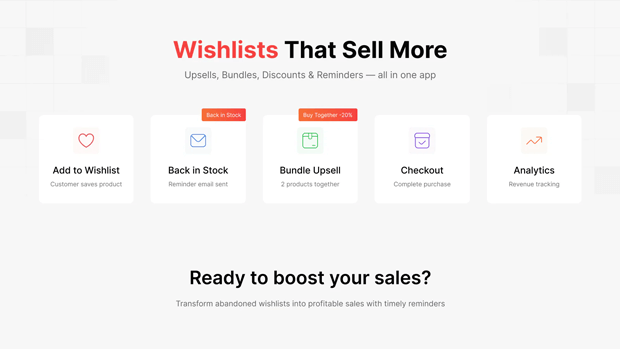
What it is
GP Wishlist & Upsell Suite is a post-purchase and intent capture tool that lets shoppers save items for later, create wishlists, and receive upsell offers. It extends the revenue opportunity beyond the initial session.
Top Features
- Guest and registered wishlists for low-friction intent capture.
- Save-for-later functionality for hesitant buyers.
- Automated reminders when saved items drop in price or return to stock.
- Product bundles and upsells triggered post-purchase.
Financial Impact
- Captures delayed conversions that would otherwise be lost.
- Generates incremental revenue via upsells and bundle offers.
- Extends customer lifetime value by keeping shoppers engaged after leaving the store.
When This Fails
- No follow-up automation leads to lost opportunities.
- Poor notification timing reduces effectiveness.
- User experience friction discourages wishlist usage.
Diagnostic Framework
- Track wishlist conversion rates.
- Measure upsell and bundle redemption.
- Monitor follow-up engagement and timing.
Stack Integration: How Shopify’s Tech Stack Layers Work Together
A modern Shopify stack works end-to-end, connecting every layer from tracking to post-purchase revenue capture.
Flow Example:
- Traffic arrives → Pixee captures all interactions for proper attribution.
- Visitor engages → Zipchat AI recommends products, answers questions, and recovers abandoned carts.
- Personalized discovery → Rebuy presents dynamic recommendations and upsells during the session.
- Retention and marketing → LoyaltyLion and Klaviyo nurture buyers and encourage repeat purchases.
- Post-purchase capture → GP Wishlist & Upsell Suite converts delayed intent into completed orders.
Zipchat’s Strategic Role:
- Central hub of shopper engagement.
- Feeds behavioral data into Pixee and Daasity for attribution and analytics.
- Works in tandem with Rebuy to influence AOV during live conversations.
Real-World Ecommerce Technology Stack Case Studies
Example 1:
- Shopify integrates Zipchat + Pixee + Rebuy.
- Result: 18% increase in chat-assisted conversions and a 12% lift in AOV.
- Attribution improved: Pixee tracked every interaction, feeding Rebuy recommendations.
Example 2:
- Brand uses Klaviyo + LoyaltyLion + GP Wishlist.
- Result: 22% repeat purchase increase and 15% higher LTV.
- Automated wishlist reminders and loyalty points triggered return purchases.
Key Benchmarks:
- Conversion rates: +15–20% via AI chat.
- Average order value: +5–12% via personalization and upsells.
- Repeat purchase rate: +15–25% via loyalty and post-purchase capture.
2026+ Future Outlook of Ecommerce Tools
- AI Chat Evolution: Chatbots will become digital sales assistants that understand buyer intent and personalize in real time.
- Automation Across Marketing: Fully automated post-purchase sequences, upsells, and loyalty interactions will reduce manual work.
- Behavioral Shifts: Shoppers expect instant, personalized recommendations and frictionless follow-ups.
- Measurement Evolution: Server-side tracking and AI-driven attribution will become standard, allowing accurate ROI calculation and predictive analytics.
Freequently Asked Questions
How does Zipchat differ from a standard chatbot?
Zipchat is AI-driven and ecommerce-native. It guides shoppers through purchases, recommending products, and recovering carts beyond answering FAQs.
Can Pixee track across all ad platforms simultaneously?
Yes. It manages multiple pixels and integrates with Conversions API for Meta, TikTok, Pinterest, and more.
Conclusion
Building a Shopify store that scales in 2026 and beyond requires a full-stack approach. This starts from tracking to AI chat, personalization, retention, and post-purchase capture.