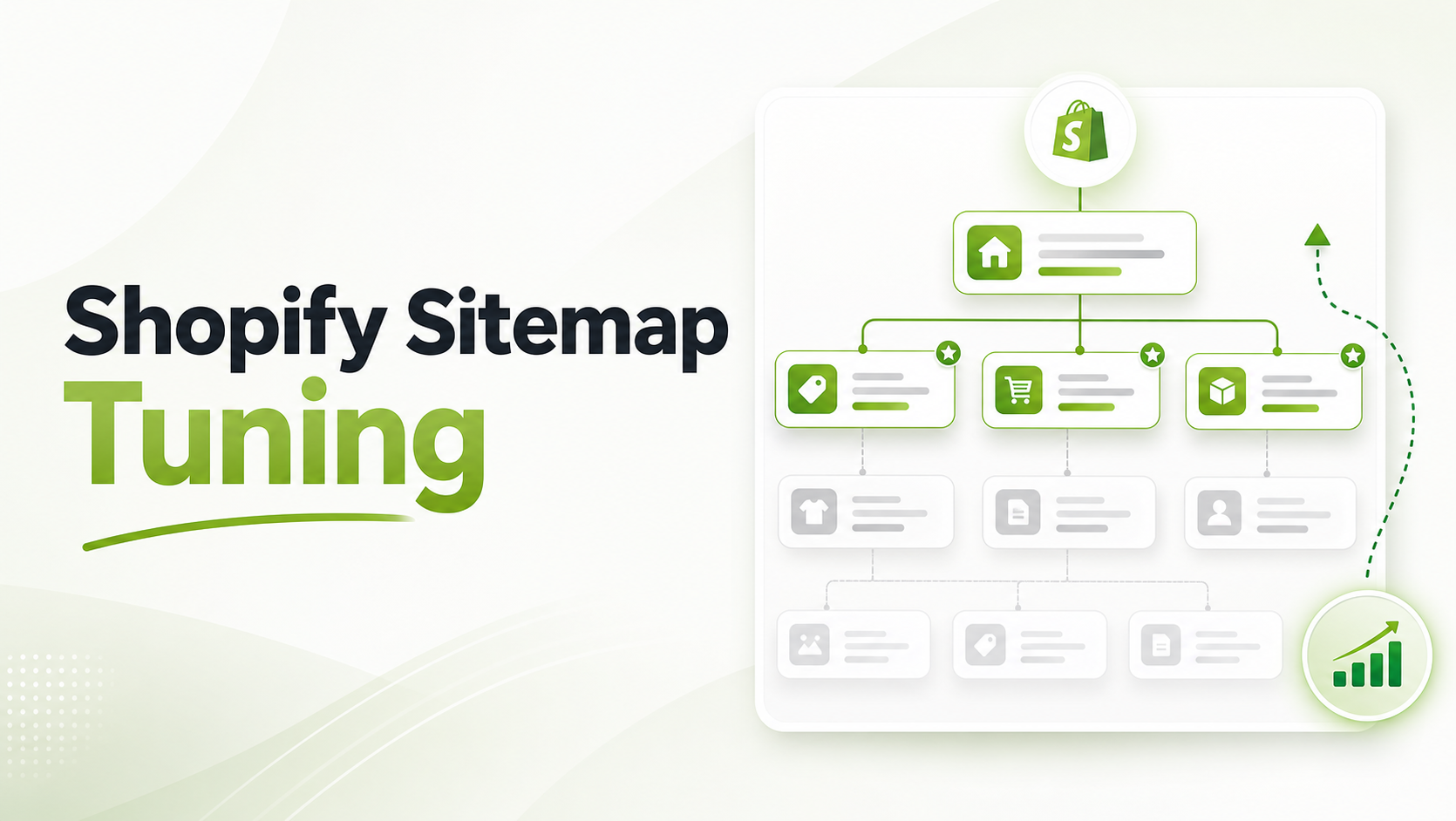
Every Shopify store comes with a built-in XML sitemap located at yourstore.com/sitemap.xml. By default, Shopify is “generous”—it includes almost everything: every product, every collection, every blog post, and every static page.
While this sounds helpful, a “noisy” sitemap can actually hurt your SEO. When Googlebot spends time crawling low-value “Thank You” pages, draft collections, or utility pages, it has less energy (and “crawl budget”) for your high-margin products. Tuning your sitemap is about telling Google: “Don’t look at the clutter; look at the revenue drivers.”
To tune your Shopify sitemap, use the seo.hidden metafield or robots.txt.liquid to exclude low-value URLs. Removing “thin” content ensures Google prioritizes crawling your high-intent product and collection pages, improving indexing speed and search visibility.
The “Sitemap Bloat” Problem Shopify Merchants Face
Most Shopify merchants assume that if a page is in the sitemap, it will rank. In reality, Google uses sitemaps primarily as a discovery tool. If your sitemap is bloated with 1,000 URLs but only 200 are actually worth ranking, Google may struggle to identify your topical authority.
Common “junk” URLs found in untuned Shopify sitemaps include:
- Redundant tag-filtered collection pages.
- “Policy” pages (Privacy, TOS) that don’t need to rank.
- Out-of-stock products that won’t be restocked.
- Internal search result pages.
Why Shopify Sitemap Tuning Matters for Indexing
Google does not have infinite resources. According to Google Search Central, crawl budget is a priority for sites with over 10,000 URLs, but even smaller Shopify stores feel the pinch.
If your sitemap is cluttered, you’ll often see the dreaded “Crawled – currently not indexed” status in Google Search Console. This usually means Google found the page but decided it wasn’t valuable enough to show to users.
Tuning your sitemap forces Google to focus on your highest-quality content.
How to Diagnose Sitemap Issues Step-by-Step
Before you start cutting, you need to see what Google sees.
- Check the Index Coverage: Go to Google Search Console > Indexing > Sitemaps. Look for the “Success” status and the number of discovered URLs.
- Analyze the Ratio: Compare “Discovered URLs” to “Valid Indexed Pages.” If you have 5,000 discovered URLs but only 1,000 indexed, you have a bloat problem.
- Spot the Junk: Use the “Pages” report in GSC. Filter by “Excluded” and look for patterns. Are hundreds of /collections/types?q= URLs appearing? Those are prime candidates for removal.
Recommended Blogs for You:
👉 XML vs HTML Sitemap: Which Does Your Shopify Store Really Need?
👉 Shopify Gift Wrap Analytics: Deciding Whether to Charge, Discount, or Offer It Free
👉 What is an llms.txt File and Why Your Shopify Store Needs One
👉 How to Add a Request a Quote Button in Shopify
How to Fix Shopify Sitemap Issues Manually
Shopify doesn’t allow you to edit the sitemap.xml file directly because it is dynamically generated. However, you can control what appears in it.
1. Use the seo.hidden Metafield
This is the “secret” Shopify way to hide specific pages.
- Use a metafield editor (or Shopify’s native metafields in Settings).
- Create a definition for Products, Pages, or Collections.
- Namespace: seo, Key: hidden.
- Set the value to 1 (integer).
- Once saved, Shopify will automatically add a noindex tag to the page and remove it from the XML sitemap within 24 hours.
2. Edit the robots.txt.liquid Template
Since 2021, Shopify allows you to edit the robots file.
- Go to Online Store > Themes > Actions > Edit Code.
- Add a new template called robots.txt.liquid.
- You can add Disallow rules for specific URL patterns (like /collections/*/*) to prevent Google from wasting time on filtered views.
When a Shopify App Makes Sitemap Tuning Easier
Manual metafield management is fine for five pages, but if you have a catalog of 500 products, it becomes a nightmare.
For merchants who need to manage indexation at scale, using a dedicated tool like NoIndexly can save hours.

Instead of hunting through code or individual product pages, you can manage your sitemap and “noindex” rules from a single dashboard.
This is particularly useful for seasonal stores that need to quickly hide hundreds of “End of Season” products without deleting them entirely.
Common Shopify Sitemap Mistakes to Avoid
- Noindexing without Sitemap Removal: If you manually add a noindex tag in your theme.liquid but leave the URL in the sitemap, you are sending conflicting signals to Google.
- Blocking URLs in Robots.txt that have Noindex Tags: If you block a URL in robots.txt, Google can’t “see” the noindex tag on the page. Use one or the other.
- Hiding Pagination: Don’t hide /collections/all?page=2. Google needs these to discover products buried deep in your catalog.
Final Recap: How to Keep Your Shopify Sitemap Lean
Tuning your sitemap isn’t a “one-and-done” task. As you add products and blog posts, the clutter grows.
- Audit your Google Search Console monthly.
- Hide low-value utility pages using the seo.hidden metafield.
- Prevent crawl waste by refining your robots.txt.liquid file.
- Automate the process with an app if you manage more than 100 SKUs.
If you want to clean up your sitemap and manage “noindex” tags without touching a single line of liquid code, you can use NoIndexly by GroPulse. It provides a central command center for your store’s visibility, making it easy to prioritize the URLs that actually drive sales.
Frequently Asked Questions
How do I find my Shopify sitemap?
Your sitemap is always located at the root of your domain: yourdomain.com/sitemap.xml.
Can I manually edit the sitemap.xml file in Shopify?
No, Shopify generates this file automatically. You can only influence it by using the seo.hidden metafield or by deleting/unpublishing content.
Does removing a page from the sitemap delete the page?
No. Removing a page from the sitemap simply tells search engines not to prioritize it. The page remains live and accessible to customers who have the direct link.
What is the difference between noindex and removing from a sitemap?
A noindex tag tells Google not to show the page in search results. Removing it from the sitemap tells Google not to prioritize crawling it. For best results, use both for “junk” pages.